
Last updated: 7 November 2026
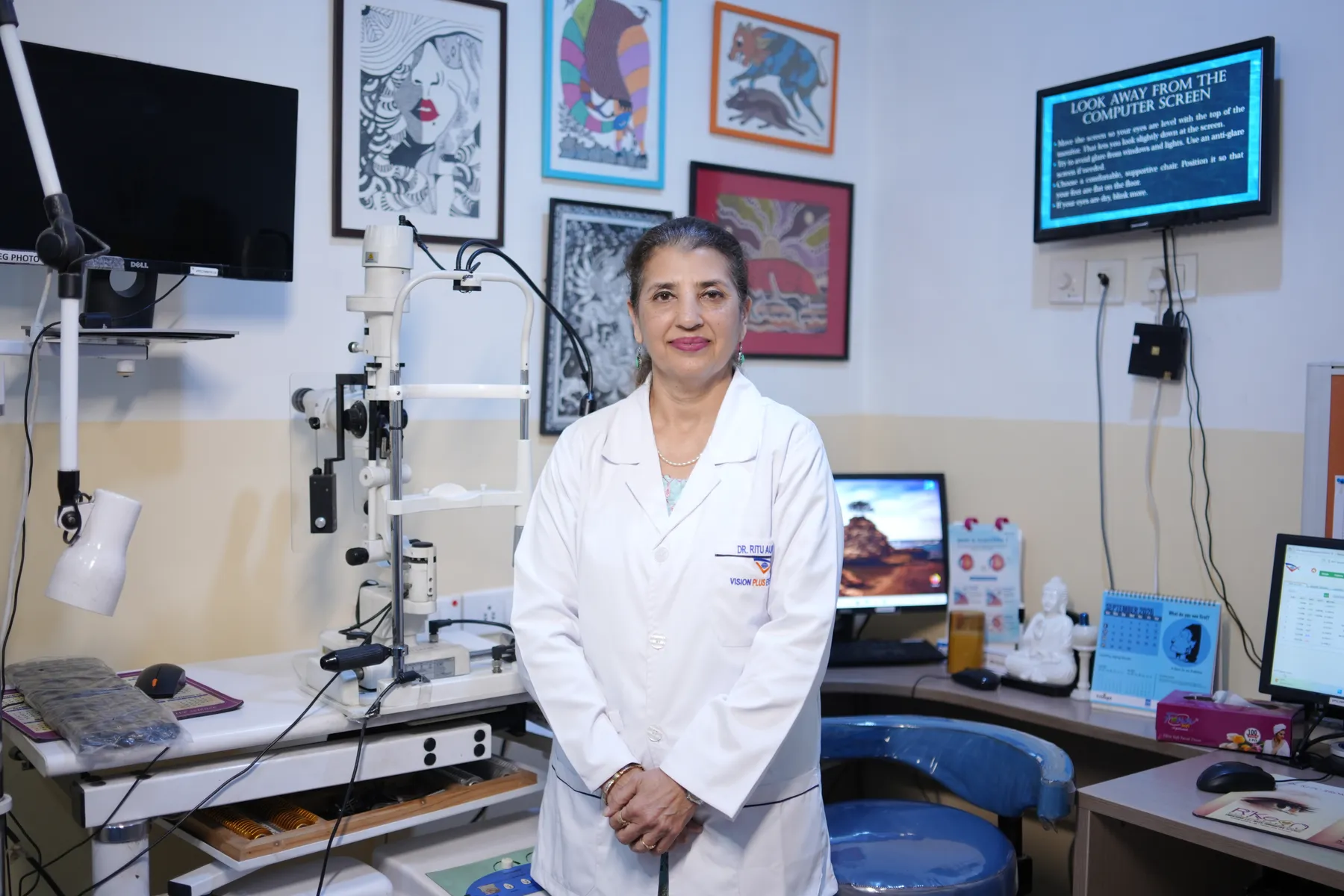
*Written by the Vision Plus clinical content team, medically reviewed by Dr. Ritu Aurora, November 2026.*
Most side effects of LASIK are mild and temporary, mainly dry eye, glare and light sensitivity, and they ease over days to months. Serious complications are rare when patients are chosen carefully. The reshaping of your cornea is lasting, but your eyes can still change with age, so "permanent" needs some explaining.
Common LASIK side effects and how long they last
| Side effect | How common | Usually lasts | What helps |
|---|---|---|---|
| Dry eye | Very common early | Weeks to a few months | Lubricating drops, sometimes tear-duct plugs |
| Glare, halos, starbursts | Common early | Weeks to months; a few notice it longer | Time; checking pupil size before surgery |
| Light sensitivity | Common early | Days to weeks | Sunglasses, drops |
| Fluctuating vision | Common early | Days to weeks | Time |
| Mild redness or a patch on the white of the eye | Common | One to three weeks | Usually settles alone |
| Under or over-correction | Uncommon | Persistent until treated | Enhancement if suitable |
| Infection, flap problems | Rare | Needs treatment | Urgent care |
| Corneal ectasia (thinning and bulging) | Very rare | Long term | Screening prevents most cases |
"Common" and "rare" here are general terms. Your own risk depends on your eye measurements, which is why the LASIK eligibility tests matter.
Why does dry eye happen?
LASIK cuts tiny corneal nerves that tell your eye to make tears. Until they regrow, the eye may feel gritty or tire easily. For most people, this settles within three to six months, though some need drops for longer. Those who already have dry eye should have it treated before surgery.
What are the rarer risks?
- Flap complications: The flap may wrinkle or shift in early days. Not rubbing the eye lowers this risk.
- Infection or inflammation: Uncommon, and treated with drops. Following the drop schedule is the best prevention.
- Ectasia: The cornea weakens and bulges. This is rare and mostly linked to undetected keratoconus or too much tissue removal, which is why scans and thickness checks come first.
- Night vision problems: Some people keep halos around lights. Large pupils and higher powers raise the chance.
How long do LASIK results last?
The laser permanently changes the cornea's shape, so the correction does not "wear off". However, three things can change your vision later:
- Regression: In a small share of people, especially those who started with high power, some power returns over years. An enhancement may be possible if the cornea allows.
- Age-related change: After about 40 to 45, near focus weakens (presbyopia) and reading glasses become necessary. LASIK does not prevent this.
- Cataract: Everyone may develop a cataract in later life. Previous LASIK can make lens power calculation harder, so tell your future surgeon about it.
So the honest answer is that LASIK gives long-lasting distance correction for most people, not a guarantee for life. Compare other options in LASIK vs ICL vs SMILE .
How to lower your chances of problems
- Choose a clinic that screens thoroughly and says "no" when needed
- Disclose dry eye, contact lens use, medicines and health history
- Follow the drop schedule and keep every follow-up
- Avoid rubbing, swimming and dusty places in the early weeks
- Wear sunglasses outdoors
Noida note
Screen-heavy work and polluted winter air can make dry eye feel worse during recovery. Keep lubricating drops handy, follow the 20-20-20 rule (every 20 minutes, look 20 feet away for 20 seconds) and use a humidifier or avoid direct air-conditioner draughts at your desk.
When to see a doctor
Contact the clinic quickly for severe or worsening pain, rapidly falling vision, marked redness, light sensitivity that grows or a sense of something wrong with the flap after an injury. Do not wait for the next scheduled visit.
Frequently asked questions
What are the side effects of LASIK?
The most common are dry eye, glare, halos and light sensitivity, mostly temporary. Rarer problems include flap issues, infection, under or over-correction and corneal ectasia. Risk is lowered by careful screening and good aftercare. Your surgeon will explain risks specific to your eyes.
How long does dry eye last after LASIK?
For most people it improves over three to six months. Some need lubricating drops longer, and a few have lasting mild dryness. Treating dry eye before surgery and using drops regularly afterwards reduces discomfort.
How long do LASIK results last?
The corneal reshaping is permanent, so most people enjoy stable distance vision for many years. Small power changes can return in some, and presbyopia and cataract still arrive with age. It is long-lasting, not a lifetime guarantee.
Can LASIK be repeated, and what does it cost?
An enhancement is possible only if your cornea is thick enough and the measurements are stable. Policies and fees vary, so ask in advance. Indicative primary LASIK is Rs 30,000 to 70,000 per eye; see LASIK cost in Noida .
Talk through the risks before you decide
A good LASIK decision starts with an honest discussion. Learn about LASIK surgery in Noida , then book at Vision Plus Eye Centre, Sector 51, Noida, or Gaur City-1, Greater Noida West. Appointments and WhatsApp: +91 8800313134. Surgery consultation: +91 9717417417.
Medically reviewed by Dr. Ritu Aurora, November 2026