

Last updated: 7 November 2026
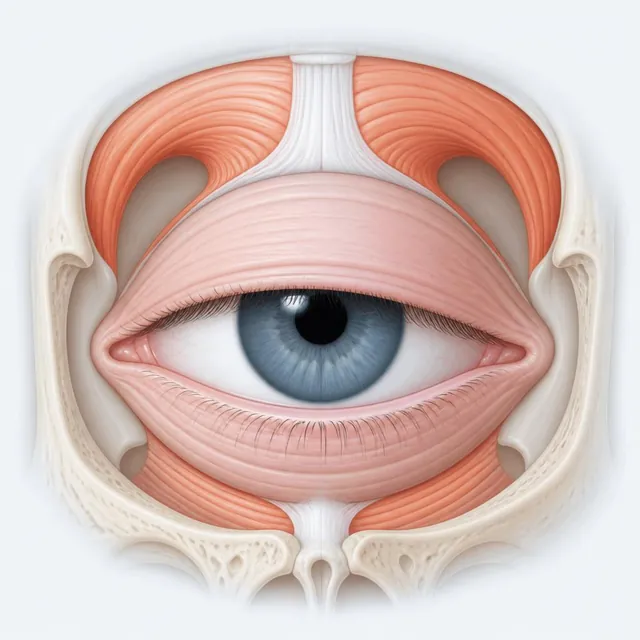
Ptosis (pronounced "toe-sis") is a drooping of the upper eyelid. It can be mild and only affect looks, or severe enough to cover the pupil and block vision. In children it can cause a lazy eye if left untreated. Sudden ptosis in an adult, especially with double vision, can signal a nerve or brain problem and needs same-day medical attention.
Symptoms of ptosis
The main sign is an upper eyelid sitting lower than normal, in one or both eyes. It may look worse when tired.
- A "sleepy" or uneven look, or one eye appearing smaller.
- Tilting the head back or lifting the eyebrows to see.
- In a child, a chin-up head posture or one eye used less.
Red flags: do not wait
Go to a doctor the same day if drooping starts suddenly, or comes with double vision, a larger or oddly shaped pupil, severe headache, eye pain, weakness in the face or limbs, or trouble swallowing. These can point to a third-nerve palsy, stroke, aneurysm or myasthenia gravis.
Causes and risk factors
Most adult ptosis comes from age-related stretching of the lid-lifting tendon (the levator aponeurosis); in children it is usually present from birth.
- Congenital: weak levator muscle, from birth.
- Age-related: tendon stretches or comes loose; also after cataract surgery, long contact lens wear or rubbing the eyes.
- Nerve-related: third-nerve palsy, Horner syndrome (mild drooping with a small pupil), diabetes-related nerve damage.
- Muscle disease: myasthenia gravis (droopiness that varies through the day), thyroid eye disease.
How ptosis is diagnosed
The assessment is a clinic examination with a few measurements. The doctor measures the gap between the pupil centre and the upper lid edge (MRD1), the lid's lifting power (levator function), and checks eye movements, pupils and blink. Tests for myasthenia, such as an ice-pack test or blood tests, or a scan for nerve causes, are arranged if the story suggests them. In children, vision and glasses power are checked to rule out amblyopia.
Treatment options
Treatment depends on the cause, how much the lid droops and how well the muscle works.
| Option | When it is used |
|---|---|
| Treat the cause (nerve, thyroid, myasthenia) | When ptosis is secondary to disease |
| Observation | Mild ptosis in adults with no vision block |
| Levator or tendon (aponeurosis) repair | Good muscle power, age-related |
| Muller muscle-conjunctival resection | Mild ptosis with good response to a test drop |
| Frontalis sling | Very poor muscle power, often in children |
Surgery is done under local anaesthesia in adults and general in children, usually as day-care. Risks include under- or over-correction, uneven height, dry eye and a lid that does not close fully. A second small adjustment is sometimes needed. Results are not guaranteed. In children with ptosis that blocks the pupil, early surgery protects vision.
What Vision Plus does for ptosis
Vision Plus runs modular operation theatres for oculoplastic surgery and the oculoplasty and aesthetics service at Sector 51, with consultation at Gaur City-1. Children are assessed by the paediatric team, including Dr. Ritu Aurora for lazy eye and glasses. Ptosis consultant: Dr. Rituraj Baruah (visiting oculoplasty consultant). See also squint and amblyopia .
Cost note
The cost depends on technique, one or both lids, anaesthesia and day-care stay. The desk can give an estimate after examination, and an indicative comparison page is at eye treatment cost in Noida . CGHS and cashless insurance support, confirm panel at the desk; insurers may treat purely cosmetic ptosis differently from vision-blocking ptosis. Prices reviewed: November 2026.
Living with it
For related lid problems see stye and chalazion and watery eyes , or browse the eye diseases hub .
Frequently asked questions
What causes a drooping eyelid?
In adults, the commonest cause is age-related stretching of the lid-lifting tendon. Others are nerve problems, myasthenia, thyroid eye disease, injury or a lump. Children are usually born with a weak muscle. An examination separates harmless from serious causes.
Is a drooping eyelid dangerous?
Slow, mild drooping is usually not dangerous. Sudden drooping with double vision, headache, a changed pupil or weakness is an emergency, because it can reflect nerve compression or stroke. Seek care the same day in that situation.
Can ptosis be treated without surgery?
Only the cause can be treated without surgery, such as myasthenia or thyroid disease. Otherwise, glasses with a crutch can hold the lid up. Eye drops, exercise and massage do not repair a stretched tendon.
What is recovery after ptosis surgery like?
Swelling and bruising settle in one to two weeks. You use ointment and cold compresses, avoid rubbing and heavy exertion, and attend a review in about a week. Final lid height takes a few weeks to settle.
How much does ptosis surgery cost in Noida?
The price varies with the technique and whether one or both lids are treated. Get a written estimate after examination from the desk. Ask whether your insurer covers vision-blocking ptosis, as policies differ.
At what age should child ptosis be treated?
If the lid covers the pupil, surgery or a sling may be advised early, even in infancy, to prevent lazy eye. Milder cases are watched and operated at pre-school age. The paediatric team decides after vision tests.
Book an examination
Call or WhatsApp +91 8800313134, or book at /appointment . Surgery consultation: +91 9717417417.
Sector 51: Kisan Tower, Capt Shashikant Sharma Marg (Mon to Sat 9:30 AM to 7:30 PM, Sun 10:00 AM to 4:00 PM). Gaur City-1: Aarza Square-2, Greater Noida West (Mon to Sat 10:00 AM to 7:00 PM, Sun closed).
Last reviewed: November 2026