
Last updated: 7 November 2026
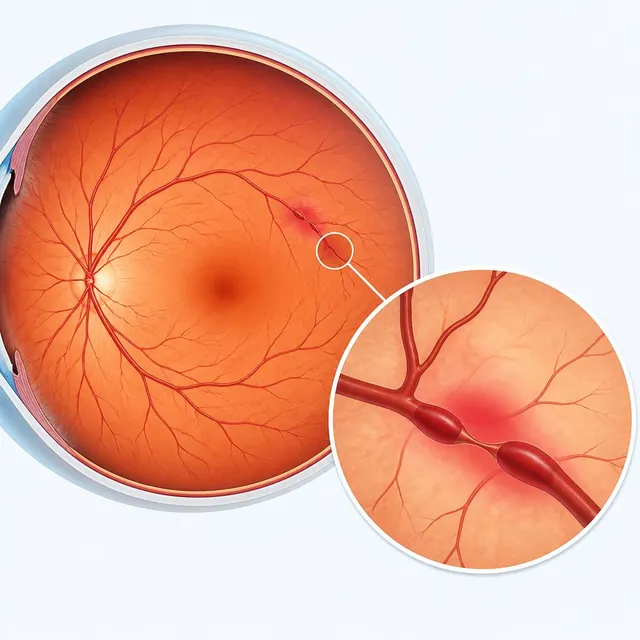
Retinal vein occlusion (RVO) happens when a vein that drains blood from the retina becomes blocked. Blood and fluid then leak into the retina and cause swelling, usually at the macula. It often causes sudden, painless blurring in one eye and is sometimes called an "eye stroke". It is linked to high blood pressure, diabetes and high cholesterol, so treatment covers both the eye and the body.
Symptoms
The usual sign is sudden blurring or a dark patch in one eye, without pain or redness. It may be noticed on waking.
- Sudden blur, or part of the vision missing, in one eye.
- Dark spots or floaters.
- Gradual worsening over days if swelling builds up.
When to see a doctor
Any sudden loss of vision needs an eye examination the same day or the next. If there is eye pain, a red eye and a hazy cornea some weeks after a vein blockage, tell the doctor, as abnormal vessels can raise eye pressure (neovascular glaucoma).
Causes and risk factors
RVO is mostly a vascular disease of the whole body, so risk factors matter.
- High blood pressure, the biggest factor.
- Diabetes and high cholesterol.
- Age above 50, smoking, obesity.
- Glaucoma or raised eye pressure.
- Blood-clotting or inflammatory disorders, especially in the young.
| Type | What is blocked | Typical effect |
|---|---|---|
| Branch RVO (BRVO) | One branch of the vein | Part of the field affected; vision often fair |
| Central RVO (CRVO) | The main vein at the optic nerve | Wide haemorrhage, blur; ischaemic type is serious |
How it is diagnosed
An RVO is seen on a dilated fundus examination and confirmed with OCT. The doctor sees scattered haemorrhages, swollen veins and sometimes swollen optic disc. OCT measures macular swelling. Fluorescein angiography (a dye test of retinal blood flow) shows areas of poor circulation that may need laser. Blood pressure, blood sugar, cholesterol, blood counts and other tests are arranged with your physician.
Treatment options
Treatment does not unblock the vein. It reduces macular swelling and prevents complications.
- Anti-VEGF injections: medicine injected into the eye (such as bevacizumab, ranibizumab or aflibercept) reduces swelling and often improves vision. Usually a series of monthly doses, then as needed.
- Steroid implant or injection: used when anti-VEGF is not enough or not suitable, with monitoring for cataract and pressure rise.
- Laser: scatter laser (panretinal photocoagulation) for abnormal vessels in ischaemic RVO; focal laser for some branch blocks.
- Vitrectomy: for non-clearing vitreous bleeding or traction.
- Body care: control blood pressure, sugar and cholesterol, and stop smoking. Follow your physician's advice on any blood-thinning medicine.
Injections are given under drops and local numbing as a short procedure. Risks are uncommon but include infection (endophthalmitis), raised pressure, bleeding and cataract. Results vary and no outcome is guaranteed.
What Vision Plus does for RVO
Vision Plus has OCT, fundus imaging and laser suites that support retina care, plus operation theatres for retinal surgery at Sector 51. Dr. Ajay Aurora, who lists intravitreal injections among his interests, leads retinal care. See Dr. Ajay Aurora and retina, uvea and vitreous care .
Cost note
Anti-VEGF injections are indicatively Rs 12,000 to 35,000 per injection, with bevacizumab lowest and branded molecules higher. Retinal laser is Rs 5,000 to 12,000 per sitting. OCT is Rs 1,500 to 4,500. Number of injections changes total cost. Final quote after examination. CGHS and cashless insurance support, confirm panel at the desk. See eye treatment cost in Noida . Prices reviewed: November 2026.
Living with it
Take blood pressure and diabetes medicines regularly, walk daily, avoid tobacco, and attend every review. See an eye doctor promptly if the other eye changes. Related: vitreous haemorrhage , optic neuritis , and the eye diseases hub .
Frequently asked questions
What is retinal vein occlusion?
It is a blockage of a retinal vein that leaves blood and fluid in the retina. Vision blurs suddenly in one eye without pain. A dilated exam and OCT confirm it, and treatment is aimed at the swelling.
Is it the same as a stroke?
It is called an eye stroke because the cause is similar, a circulation problem, but it affects the retina, not the brain. It signals higher risk of heart and brain disease, so a physician check is important.
Will my vision return?
Many people regain useful vision with treatment, especially in branch blocks and when treated early. Severe ischaemic central blocks have poorer outcomes. Vision may improve slowly and may need repeated injections.
Are the eye injections painful or risky?
The eye is numbed with drops, so most people feel pressure only. Serious risks, such as infection, are uncommon but need care. Use antibiotic drops if advised and report pain or worsening vision at once.
How much do injections cost in Noida?
Indicatively Rs 12,000 to 35,000 per injection depending on the medicine. You may need several. Retinal laser costs about Rs 5,000 to 12,000 per sitting. Ask the desk about CGHS and cashless insurance support.
Where can I be seen in Noida?
Vision Plus Sector 51 (near the metro) and Gaur City-1 for Greater Noida West. Call +91 8800313134 or use the appointment page . Bring your BP and sugar reports.
Book a retina examination
Call or WhatsApp +91 8800313134, or book at /appointment . Surgery consultation: +91 9717417417.
Sector 51: Kisan Tower, Capt Shashikant Sharma Marg (Mon to Sat 9:30 AM to 7:30 PM, Sun 10:00 AM to 4:00 PM). Gaur City-1: Aarza Square-2, Greater Noida West (Mon to Sat 10:00 AM to 7:00 PM, Sun closed).
Medically reviewed by Dr. Ajay Aurora, November 2026