

Last updated: 7 November 2026
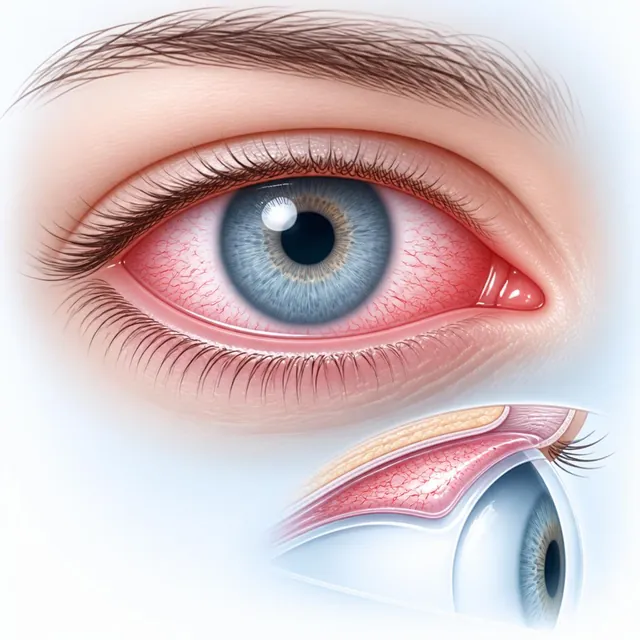
Conjunctivitis is inflammation of the conjunctiva, the thin transparent layer covering the white of the eye and the inner surface of the eyelids. It makes the eye pink or red, watery or sticky and gritty. Most cases are caused by a virus ("eye flu"), settle in one to three weeks, and rarely harm vision, but a few look similar to dangerous conditions and need to be checked.
Symptoms
- Redness of the white of the eye, one or both eyes
- Watery, sticky or pus-like discharge
- Lids stuck together on waking
- Gritty, scratchy or burning feeling
Vision is usually normal or only briefly blurred when discharge is wiped away.
Red flags: see a doctor the same day
- Pain that is deep or severe, or marked light sensitivity
- Reduced vision that does not clear on blinking
- A white or grey spot on the clear part of the eye
- Contact lens wearers with a red, painful eye
- A newborn baby with sticky red eyes in the first month
- A history of herpes around the eye, or a recent eye operation
- A very red eye after injury or chemical splash
The three main types
| Feature | Viral | Bacterial | Allergic |
|---|---|---|---|
| Discharge | Watery, some mucus | Thick yellow or green | Watery, ropy white |
| Itch | Mild | Mild | Intense |
| Eyes | Starts in one, often spreads to the other | One or both | Both |
| Other signs | Cold, sore throat, tender gland near ear | Lids stuck shut | Sneezing, itchy nose |
| Contagious | Highly | Yes | No |
| Typical course | 1 to 3 weeks | 5 to 7 days, faster with antibiotics | As long as trigger lasts |
Causes and risk factors
How it is diagnosed
A doctor examines the eye with a slit lamp, checks the cornea with a stain, looks under the lids and reviews your history. Discharge swabs for culture are taken only in severe, newborn or non-responding cases. The main reason to examine is to exclude cornea involvement, uveitis and acute glaucoma, which also cause red eyes. Read about a serious look-alike: corneal ulcer .
Treatment
Viral: no antibiotic works on a virus. Use cold compresses and lubricating drops, avoid touching the eyes, and wait. Severe cases with membranes or corneal spots may need short supervised steroid drops.
Bacterial: antibiotic drops or ointment for about five to seven days. Mild cases often clear without them, but treatment shortens illness.
Allergic: avoid triggers, cool compresses and antihistamine drops.
A warning on chemist drops: many bottles sold for "red eye" contain antibiotic plus steroid. Steroid on a herpes or fungal infection can cause permanent damage, and repeated use can raise eye pressure. Do not use leftover bottles. Also avoid home remedies such as rose water, breast milk, honey or urine.
What Vision Plus does
We see red eyes at the eye OPD at Sector 51 (Kisan Tower, near Sector 51 metro) and Gaur City-1, Noida Extension, confirm the type, check the cornea and give a short, targeted course. Stubborn or recurrent redness may need a full eye check-up or a dry eye assessment. Corneal complications are managed under our cornea service .
Prevention
- Wash hands often and do not rub eyes
- Do not share towels, handkerchiefs, eye make-up or pillows
- Use a separate clean towel for the patient; wash it hot
- Stay off school or work while discharge is heavy, generally the first few days
Frequently asked questions
Is conjunctivitis contagious?
Viral and bacterial conjunctivitis are highly contagious through hands, towels and surfaces, from a day before symptoms until discharge stops. Allergic conjunctivitis is not. Wash hands, and keep personal items separate.
How do I know if it is viral or bacterial?
Thick yellow-green discharge that glues the lids suggests bacteria. Watery discharge with a cold or sore throat suggests a virus. The difference is not always clear by eye, so a doctor's exam helps, especially if pain or reduced vision appears.
Which eye drops are safe for conjunctivitis?
Use only what a doctor prescribes. Lubricating drops are safe. Antibiotics help bacterial cases. Avoid combination antibiotic-steroid bottles from a chemist, since steroids can worsen herpes and fungal infections and raise eye pressure.
How long does conjunctivitis last?
Viral cases usually last one to three weeks, getting better after the first week. Bacterial cases improve in a few days with treatment. Allergic cases last as long as the trigger. Persistence beyond two weeks needs review.
When can my child go back to school?
Once discharge is minimal and the eyes are comfortable, usually after three to five days, though schools may have their own rules. Teach the child to wash hands and not share towels. A doctor can give a fitness note.
When should I see a doctor in Noida?
At once for pain, light sensitivity, blurred vision, a newborn, contact lens wear or a recent eye injury. Otherwise if no better in a week. Call +91 8800313134 or book an appointment at Sector 51 or Gaur City-1.
Book an eye check-up in Noida
A red eye is easy to treat when the cause is right and harder when it is not. Call or WhatsApp +91 8800313134, or book online . Sector 51: Mon to Sat 9:30 AM to 7:30 PM, Sun 10:00 AM to 4:00 PM. Gaur City-1: Mon to Sat 10:00 AM to 7:00 PM. More in our eye diseases library .
Medically reviewed by Dr. Ritu Aurora, November 2026