
Last updated: 7 November 2026
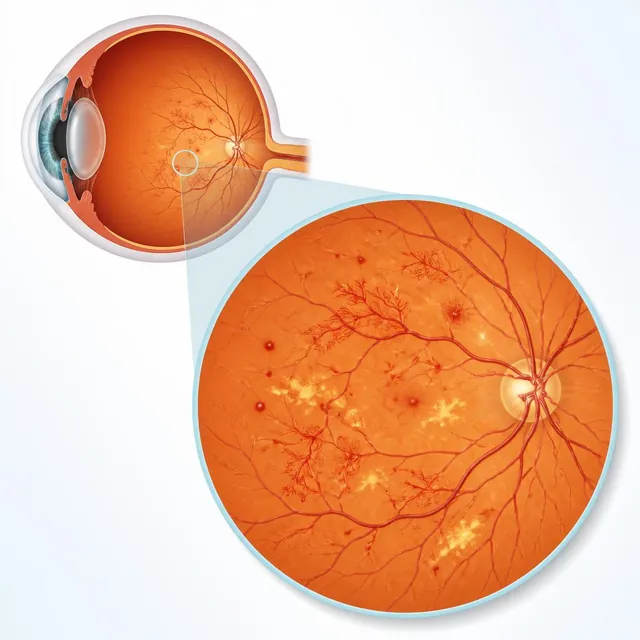
Diabetic retinopathy (DR) is damage to the tiny blood vessels of the retina, the light-sensing layer at the back of the eye, caused by long-standing high blood sugar. It is a leading cause of preventable blindness in working-age adults. Early DR has no symptoms, so a yearly dilated eye check is the best protection. Laser, injections and surgery can stop it from getting worse, but they cannot undo lost sight.
Symptoms and warning signs
In the early stages you will see normally. Later you may notice:
- Floaters, dark spots or strings
- Blurred or fluctuating vision
- Distorted or dim central vision (a sign of macular swelling)
- Sudden vision loss from bleeding in the eye
Red flags
Sudden loss of vision, a shower of floaters, flashes of light or a dark curtain need a same-day retina check. They may mean vitreous haemorrhage or retinal detachment. Do not wait for the next routine visit.
Stages: what each means and what to do
| Stage | What happens in the retina | Usual action |
|---|---|---|
| Mild non-proliferative (NPDR) | Tiny microaneurysms | Control sugar, BP and lipids; review in 6 to 12 months |
| Moderate NPDR | More leaks and haemorrhages | Review in 3 to 6 months |
| Severe NPDR | Large areas of poor blood supply | Close follow-up; laser may be advised |
| Proliferative (PDR) | Fragile new vessels grow; bleeding risk | Laser (PRP) and/or anti-VEGF; vitrectomy if bleeding or traction |
| Diabetic macular oedema (DME) | Fluid swelling in the macula, at any stage | Anti-VEGF injections, sometimes laser or steroid implant |
Causes and risk factors
High glucose over years weakens and blocks retinal capillaries. Risk goes up with duration of diabetes, poor control (high HbA1c), high blood pressure, high cholesterol, kidney disease, smoking and pregnancy. After 15 to 20 years of diabetes, most people show some retinopathy. Good control reduces both onset and progression.
How it is diagnosed
Treatment options
- Control first: blood sugar, blood pressure and cholesterol. This slows every stage. Do not stop medicines to "protect" eyes.
- Anti-VEGF injections (bevacizumab, ranibizumab, aflibercept and biosimilars) into the eye for DME and PDR; usually a series of monthly injections initially.
- Laser photocoagulation: panretinal (PRP) laser for proliferative disease and severe NPDR; focal laser for selected leaks.
- Steroid implants/injections in selected DME cases, with watch for pressure and cataract.
- Vitrectomy surgery to clear blood or release scar tissue pulling on the retina. See retina surgery .
Indicative costs in Noida (per eye, final quote after examination; prices reviewed November 2026):
| Treatment | Indicative range |
|---|---|
| Anti-VEGF injection | Rs 12,000 to 35,000 per injection, by molecule |
| Retinal laser | Rs 5,000 to 12,000 per sitting |
| Vitrectomy | Rs 50,000 to 1,20,000+ |
| OCT scan | Rs 1,500 to 4,500 |
See the eye treatment cost guide . CGHS and cashless insurance support, confirm panel at the desk
What Vision Plus does
Dr. Ajay Aurora is a vitreoretinal specialist who led the All India Ophthalmological Society (AIOS) instruction course on diabetic retinopathy in 2021. Diabetic patients are seen at Sector 51 (near Sector 51 metro) with retinal imaging, OCT, laser and injections, and referral for physician review. See our diabetic eye care service and retina, uvea and vitreous care . Gaur City-1 patients can book a visit through the same desk.
Prevention and living with it
- Dilated eye exam at diagnosis for type 2 diabetes, within five years for type 1, then yearly; more often if retinopathy is present
- Diabetes also brings earlier cataract ; a dilated retina check should precede cataract surgery
Frequently asked questions
What is diabetic retinopathy?
It is damage to the retina's small blood vessels caused by long-term high blood sugar. Vessels leak, close or grow abnormally, leading to swelling and bleeding. It can occur without symptoms until it is advanced.
How often should a person with diabetes get their eyes checked?
At least once a year with pupils dilated, starting at diagnosis in type 2 diabetes. If retinopathy is present, follow-up may be every 3 to 6 months. In pregnancy, more frequent checks are needed.
Can diabetic retinopathy be cured or reversed?
Not fully. Treatment can stop or slow progress and sometimes improve swelling, but lost retinal tissue does not grow back. That is why early detection and sugar control matter more than any later treatment.
Are anti-VEGF injections and laser safe?
They are routine, day-care procedures with risks such as infection, bleeding or raised pressure, which are uncommon and explained beforehand. Untreated progressive disease carries a greater risk to sight than treatment does.
How long does recovery take after laser or injection?
Most people go home the same day and resume routine activity within a day or two. Vision may be blurred for hours to days. Vitrectomy takes longer, often several weeks with eye positioning or gas.
How much does diabetic retinopathy treatment cost in Noida?
Indicatively Rs 12,000 to 35,000 per injection, Rs 5,000 to 12,000 per laser sitting and Rs 50,000 to 1,20,000+ for vitrectomy. Final quote follows examination. Call +91 8800313134 or book an appointment .
Book a diabetic eye check-up in Noida
Bring your latest sugar reports and current medicines. Call or WhatsApp +91 8800313134, or book online . Sector 51: Mon to Sat 9:30 AM to 7:30 PM, Sun 10:00 AM to 4:00 PM. Gaur City-1: Mon to Sat 10:00 AM to 7:00 PM. More in our eye diseases library .
Medically reviewed by Dr. Ajay Aurora, November 2026