

Last updated: 7 November 2026
Dry eye is a long-term problem of the tear film that causes burning, grittiness, redness, watering and tired eyes. In Noida it is common among people who work long hours on screens in air-conditioned offices and travel through dust and pollution. Treatment works in steps, from lifestyle changes and lubricating drops to treating the oil glands in the eyelids and, for stubborn cases, in-clinic procedures. A consultation with tests costs about Rs 1,000 to 2,500.
Dr. Ritu Aurora and Dr. Ajay Aurora both list dry eye among their clinical interests. We see patients for it at Sector 51 and at Gaur City in Noida Extension.
Dry eye symptoms
Dry eye does not always feel dry. The most common symptoms are:
- Burning, stinging or a gritty, sandy feeling
- Red eyes, especially by evening
- Watering (the eye makes reflex tears when the surface is irritated)
- Blurred vision that clears after blinking
- Light sensitivity and heavy, tired eyes
- Difficulty wearing contact lenses
- Stringy mucus, or crusting of the lids on waking
Watering surprises many people, but a watery eye can be a dry eye. Blocked tear ducts can also cause it, so the cause is checked. See our oculoplasty page for tear duct surgery.
What causes dry eye?
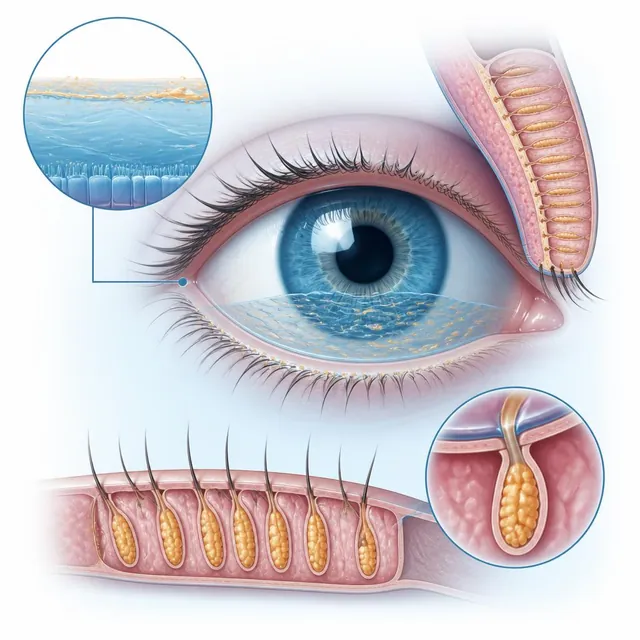
Dry eye happens when the tear film breaks up too quickly, or too few tears are made. The commonest cause is a problem with the meibomian glands, tiny oil glands in the eyelid edges, which keep tears from evaporating.
| Cause | How it leads to dry eye |
|---|---|
| Meibomian gland dysfunction (MGD) | Glands are blocked or produce poor oil, so tears evaporate fast. This is the most common type |
| Low tear production (aqueous deficiency) | Tear glands make too little. Linked to age, Sjogren's syndrome and other autoimmune diseases |
| Screen use | Blinking drops significantly during screen work, and blinks are often partial |
| Air-conditioning and fans | Dry, moving air speeds up evaporation |
| Pollution, dust and smoke | Irritates the surface and disturbs the tear film |
| Contact lenses | Lenses disturb the tear film and absorb moisture |
| Medicines | Antihistamines, some antidepressants, isotretinoin, and others |
| Hormones and age | Menopause and ageing reduce tear quality |
| Eye surgery | Temporary dryness is common after LASIK and cataract surgery |
| Diabetes, thyroid disease, blepharitis | Raise the risk or worsen dryness |
Many people have more than one cause at the same time.
Meibomian gland dysfunction (MGD)
MGD means the oil glands in the eyelids are blocked or not working well. Without the oil layer, tears evaporate within seconds. Signs include thick or toothpaste-like secretions, frothy tears, crusted lashes, repeated styes or chalazia, and eyelid edge redness. MGD tends to be chronic and needs ongoing care, not a one-time fix. Warm compresses and lid hygiene are the foundation, and in-clinic treatment can be added when they are not enough.
Dry eye tests: how doctors confirm it
A proper diagnosis combines your history with a few quick tests. They show the type of dry eye, which decides the treatment.
| Test | What it measures | A concerning result |
|---|---|---|
| Symptom questionnaire (such as OSDI) | How much symptoms affect you | Higher scores mean more disease |
| TBUT (tear break-up time) | A yellow dye is placed in the eye and the time before the tear film breaks is counted | Under about 10 seconds |
| Schirmer test | A thin paper strip under the lower lid measures tear volume in 5 minutes | Under about 10 mm in 5 minutes (very low under 5 mm) |
| Corneal staining | Dye shows dry spots on the surface | Staining patches |
| Eyelid and gland examination | Gland openings, secretions, lid margin | Plugged openings, thick secretions |
| Meibography | Imaging of the oil glands | Shortened or dropped-out glands |
Your doctor chooses the tests that fit you, and the most basic ones (history, slit lamp, TBUT, Schirmer, staining) can be done in one visit.
Dry eye treatment ladder: step by step
Treatment starts with simple measures and moves up only when needed. Most people improve at steps 1 to 3. The aim is to control symptoms and protect the surface of the eye, as dry eye is usually managed, not cured.
- Remove triggers. Screen breaks, humidity, avoiding direct air from AC and fans, reviewing medicines with your doctor, and treating allergy.
- Lubricating drops. Preservative-free artificial tears if used more than 4 times a day. Gels or ointments at night. Do not use "whitening" or "redness-removing" drops.
- Lid care. Warm compress for 5 to 10 minutes and gentle lid massage and cleaning daily, particularly for MGD and blepharitis.
- Anti-inflammatory treatment. Short courses of steroid drops under supervision, or longer-term cyclosporine drops for moderate dry eye. Benefit often takes weeks.
- Oral supplements and other options. Some doctors suggest omega-3 supplements, though research results are mixed. Antibiotics at low dose for lid disease in selected cases.
- Punctal plugs. Tiny plugs placed in the tear drainage openings keep tears on the eye for longer.
- Autologous serum drops or specialty lenses. Drops made from your own blood serum, or scleral lenses, for severe disease. See contact lenses .
- In-clinic gland treatments. Procedures such as thermal pulsation, intense pulsed light (IPL) or gland expression for MGD. At Vision Plus, in-clinic IPL therapy and lid-margin treatment are available..
Dry eye treatment cost in Noida
For a dry eye consultation with tests, please call the desk for current consultation fees. Medicines cost about Rs 500 to 2,000 a month. In-clinic procedures, where offered, are Rs 3,000 to 15,000 per session.
| Item | Indicative cost |
|---|---|
| Consultation with dry eye tests | Please call the desk for current consultation fees. |
| Medical therapy (drops, gels, lid care products) | Rs 500 to 2,000 per month |
| In-clinic therapy (IPL and lid-margin treatment) | Rs 3,000 to 15,000 per session or procedure |
Prices reviewed: November 2026. Indicative ranges only. The final cost depends on the severity, the tests, the drops chosen and whether in-clinic therapy is needed. Cashless insurance does not usually cover dry eye procedures. CGHS and cashless insurance support is available, confirm panel at the desk.
Dry eyes from screens and AC: practical advice for Noida workers
If you work on a laptop in an air-conditioned office, these steps usually reduce symptoms.
- 20-20-20 rule. Every 20 minutes, look at something 20 feet (6 metres) away for 20 seconds. Add a few deliberate full blinks.
- Screen position. Keep the top of the screen at or just below eye level, so your eyelids are not wide open. Increase text size to avoid squinting.
- Air flow. Move your seat or the vent so air does not blow towards your face. A small humidifier or bowl of water near the desk can help in dry air.
- Hydration and rest. Drink water through the day. Sleep matters, because the eye repairs overnight.
- Pollution days. Wear wrap-around sunglasses on a two-wheeler, wash your face and eyelids after travel, and avoid rubbing the eyes. On days of heavy smog, keep windows shut and limit time outdoors.
- Contact lenses. Wear glasses on long screen days.
- Do not self-treat red eyes with steroid drops from a chemist. They can raise eye pressure and lead to cataract or glaucoma.
When to see a doctor
See an eye doctor promptly if you have:
- Severe eye pain or a red eye with reduced vision
- Light sensitivity that is getting worse
- A contact lens wearer with a red, painful eye
- Dry eyes along with dry mouth or joint pain (a possible autoimmune cause)
- Symptoms that continue despite regular use of artificial tears for 2 weeks
- A new problem after eye surgery
Frequently asked questions
What is dry eye disease?
Dry eye disease is a long-term condition where the tears do not keep the eye surface healthy, either from too little tear production or from tears that evaporate too fast. It causes burning, grittiness, redness, watering and blurred vision. Many people have a blocked oil gland problem in the eyelids.
Why do my eyes feel dry after screen work or in an AC room?
You blink less on screens, and the blinks are often incomplete, so tears evaporate. Air-conditioning also dries the air and speeds evaporation. Together they unmask an oil gland problem. Frequent breaks, positioning the screen lower, lubricating drops and avoiding direct air flow usually help.
Is dry eye serious? Can it cause blindness?
Mild dry eye is an irritation, not a threat to sight. Severe untreated disease can damage the cornea, causing scars, ulcers or infection, which can reduce vision. This is uncommon but real, which is why persistent pain, redness or reduced vision should be examined early.
What tests are done for dry eye?
Your doctor reviews symptoms and then checks the tear film with TBUT (tear break-up time), measures tear volume with Schirmer strips, stains the surface with dye and examines the eyelid glands. Imaging of the glands (meibography) may be added. Basic tests are done in one visit.
Can dry eye be cured permanently?
Dry eye is mostly a chronic condition that is controlled rather than cured. Mild cases linked to a temporary cause, such as heavy screen use or a medicine, can settle completely. For gland disease, regular lid care and sometimes periodic in-clinic treatment keep it controlled. Most people reach good comfort.
Are lubricating eye drops safe to use every day?
Yes, if they are the right kind. Preservative-free drops are safer for frequent use, over four times a day. Avoid drops sold to "remove redness" and never use steroid drops without a doctor, as they can cause cataract and raised eye pressure. Ask us which drop suits your eye.
What dry eye treatment is available in the clinic?
Beyond drops and lid care, clinic options include punctal plugs, treatments that unblock oil glands (thermal pulsation, IPL or gland expression), autologous serum and scleral lenses. Which are suitable depends on your test results. Ask the desk before booking a specific procedure.
How much does dry eye treatment cost in Noida?
For a dry eye consultation with tests, please call the desk for current consultation fees. Medicines usually cost Rs 500 to 2,000 a month. In-clinic procedures, where offered, are Rs 3,000 to 15,000 per session. These are indicative ranges, and the final plan and cost depend on your tests.
Where can I get dry eye treatment in Noida?
You can see us at Sector 51 (Kisan Tower, near Sector 51 metro) or at Gaur City 1, Greater Noida West. Call or WhatsApp +91 8800313134. Patients come from Sector 62, 18, 137 and 128, Indirapuram, Crossings Republik and East Delhi.
Book a dry eye consultation
- Sector 51 centre: Kisan Tower, FF, SF & TF, Capt Shashikant Sharma Marg, Hoshiarpur, Sector 51, Noida 201301. Mon to Sat 9:30 AM to 7:30 PM, Sun 10:00 AM to 4:00 PM.
- Gaur City centre: Shop No. 213, Aarza Square-2, Plot No. CS-2, Gaur City-1, Sector 4, Greater Noida West 201309. Mon to Sat 10:00 AM to 7:00 PM, Sun closed.
- Appointments and WhatsApp: +91 8800313134. Email: wecare@visionplus.net.in
Medically reviewed by Dr. Ritu Aurora, November 2026