Last updated: 7 November 2026
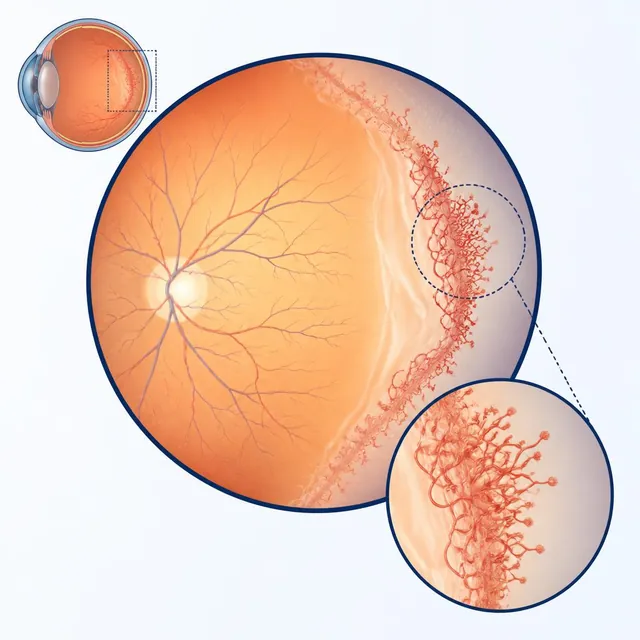
Retinopathy of prematurity (ROP) is a disease of the developing retina in babies born early or very small. Retinal blood vessels are not fully grown at birth, and in some babies they grow abnormally and can scar the retina. ROP is found only by a timed eye examination, and it is treatable when caught in time. Missed ROP is a leading cause of avoidable childhood blindness, so screening is as important as treatment.
Which babies are at risk
Screening is advised for all babies born before 34 weeks or weighing under about 2,000 grams, and for larger, sicker babies at the neonatologist's discretion. The exact criteria are set by your baby's neonatal team following Indian guidelines.
Symptoms and signs
There are usually no outward signs in the early stage, which is why screening cannot be skipped. Later or advanced ROP may show as:
- A white pupil reflex in photos.
- Eyes not following light or faces after the expected age.
Urgency
Do not wait for symptoms. The first examination is timed by age after birth and by gestation, and treatment-needing ROP must be treated within a few days (about 72 hours) of diagnosis.
How ROP is diagnosed
A retina specialist examines the baby's retina after dilating drops. The doctor records the zone (how far the blood vessels have grown), the stage (1 to 5), and whether there is "plus disease" (widened, twisted vessels). Findings decide whether to review in 1 to 2 weeks or treat now.
Treatment options
Laser and anti-VEGF injection are the main treatments; surgery is for advanced stages.
- Laser photocoagulation: burns the retina's immature outer area to stop the abnormal growth. Done under sedation or anaesthesia, and a long-established standard.
- Intravitreal anti-VEGF injection: a medicine injected into the eye that shrinks the abnormal vessels. Needs longer follow-up since ROP can return and has other considerations for the baby's general health.
- Vitrectomy or scleral buckle: for stage 4 and 5, when the retina is lifting.
Risks of treatment include inflammation, cataract, and anaesthesia risks in a small baby, all discussed with parents and the neonatologist first. Not every eye keeps good vision even with treatment.
ROP care at Vision Plus
ROP is among the listed areas of interest of Dr. Ajay Aurora, who is a co-author of the Indian ROP Society's follow-up guidelines. See Dr. Ajay Aurora and retina, uvea and vitreous care .
How referral from a NICU works
- The neonatologist or paediatrician identifies the baby as at risk and shares the birth details (weeks, weight, oxygen use).
- The family or NICU calls the appointment desk on +91 8800313134 to fix a screening date.
- The baby is examined at Sector 51 or, if arranged, as agreed with the NICU team.
- The report goes to the neonatologist and parents, with the next review date.
- If treatment is needed, it is planned within days with the baby's doctors.
Gaur City-1 (Greater Noida West) can also receive families for follow-up; glasses and squint care is with Dr. Ritu Aurora , see squint and amblyopia .
Cost note
ROP costs depend on the number of examinations, whether laser, injection or surgery is needed, anaesthesia and any hospital stay. A quote is given after the first examination. For other retina prices see eye treatment cost in Noida . CGHS and cashless insurance support, confirm panel at the desk. Prices reviewed: November 2026.
Prevention and living with it
Keep every screening appointment, even if the baby seems well. Later in childhood, yearly eye checks for glasses and squint are needed. Read more on paediatric eye diseases , retinal detachment and the eye diseases hub .
Frequently asked questions
Which babies need ROP screening?
Babies born before 34 weeks or under about 2,000 grams, plus bigger babies who needed long oxygen or were very sick. Your neonatologist will say if your baby qualifies. If unsure, ask for screening rather than skipping it.
When should the first ROP check be done?
Usually within the first few weeks after birth, timed by the baby's gestation and age, and decided by the neonatal and eye teams. Repeat checks follow every one to two weeks until the retina matures or treatment is needed.
Can ROP cause blindness?
Yes, if severe ROP is missed. Advanced ROP can detach the retina. Timely screening and treatment prevent most severe sight loss, though some eyes still do poorly. This is why checks are never optional for at-risk babies.
Is laser or an injection better?
Neither is better for all. Laser is a long-established treatment with a lasting effect. Injections act faster in some patterns of ROP but need longer follow-up. The retina specialist chooses based on zone, stage and your baby's health.
How do we arrange screening from the NICU?
The NICU doctor shares birth details and calls +91 8800313134 to book a date. You then bring the baby to Sector 51 with the discharge papers. The team reports back to the neonatologist and fixes the next review.
How much does ROP treatment cost?
The cost depends on examinations, treatment type and anaesthesia. A quote is given after the first check. Ask the desk about CGHS and cashless insurance support. See the cost page for other retina procedures.
Book an ROP screening
Call or WhatsApp +91 8800313134, or book at /appointment . Surgery consultation: +91 9717417417.
Sector 51: Kisan Tower, Capt Shashikant Sharma Marg (Mon to Sat 9:30 AM to 7:30 PM, Sun 10:00 AM to 4:00 PM). Gaur City-1: Aarza Square-2, Greater Noida West (Mon to Sat 10:00 AM to 7:00 PM, Sun closed).
Medically reviewed by Dr. Ajay Aurora, November 2026