
Last updated: 7 November 2026
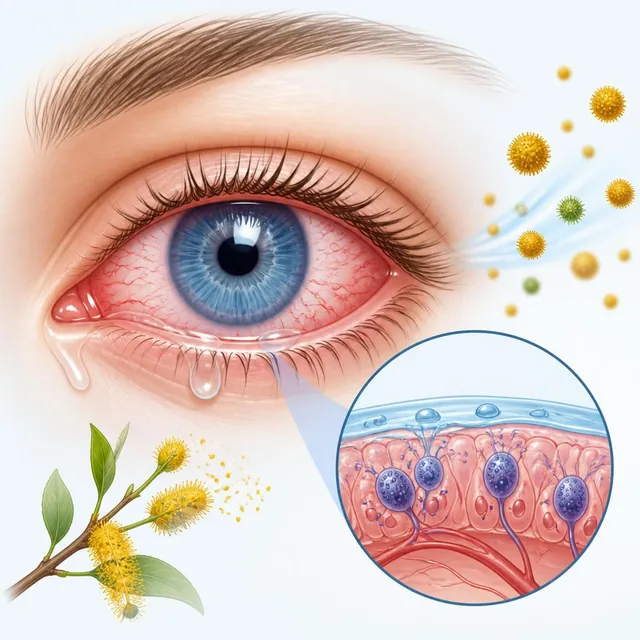
Allergic conjunctivitis is an allergic reaction of the conjunctiva, the thin clear membrane covering the white of the eye and the inside of the eyelids. Itching is the main symptom. Both eyes are usually involved, the eyes water and turn pink, and it does not spread from person to person. It is common in Noida, where dust, pollen and winter smog keep many people's eyes irritated for months.
Symptoms: how allergic eyes feel
The hallmark is itching, often strong enough to make you rub. Other symptoms include:
- Watery or ropy, stringy white discharge
- Pink or red eyes in both eyes
- Puffy, slightly swollen eyelids, worse in the morning
- A burning or gritty feeling
Allergy and infection can look alike. This table helps you tell them apart.
| Feature | Allergic | Viral ("eye flu") | Bacterial |
|---|---|---|---|
| Main complaint | Itching | Gritty, watery | Sticky, thick discharge |
| Discharge | Watery or stringy white | Watery | Yellow or green, lids stuck |
| Both eyes | Almost always | Starts in one, spreads | Often one, may spread |
| Contagious | No | Yes | Yes |
| Other signs | Sneezing, itchy nose | Cold, sore throat, tender gland near ear | Little else |
When to see a doctor straight away
Allergy should not hurt. See an eye doctor the same day for severe pain, light sensitivity, falling vision, a white spot on the cornea (the clear front window of the eye), or if you wear contact lenses and your eye is red and painful.
Causes and risk factors
The eye releases histamine when it meets something it reacts to. Common triggers in north India are house dust mites, pollen in spring and autumn, pet hair, mould, smoke, cosmetics and preservatives in eye drops. Those with asthma, eczema or hay fever are more likely to get it.
Children, usually boys aged 5 to 15, can develop a severe form called vernal keratoconjunctivitis (VKC), which flares in hot, dry months. Big itchy bumps form under the upper lid and the cornea can be scratched. Constant rubbing of itchy eyes is also linked with keratoconus, a thinning of the cornea, so controlling itch protects vision.
How it is diagnosed
Treatment: home care, drops and when more is needed
Mild cases settle with simple steps:
- Do not rub. Use a cold, clean, damp cloth over closed eyes.
Medical treatment is the next step. Antihistamine and mast cell stabiliser drops (such as olopatadine or ketotifen) are the usual first choice and are safe for regular use when prescribed. Oral antihistamines help when the nose is also affected.
Steroid drops are strong and work quickly, but should only be used for a short, supervised course. Self-use, or repeated refills from a chemist, can cause raised eye pressure (steroid glaucoma), cataract and infection. Severe VKC may need cyclosporine or tacrolimus drops under supervision for months. Surgery is not part of treatment.
What Vision Plus does
You can walk in for an eye OPD check at our Sector 51 centre (Kisan Tower, near Sector 51 metro) or at Gaur City-1, Noida Extension. We confirm that it is allergy, rule out infection and corneal involvement, and set a plan that avoids long steroid courses. Children with recurrent allergy are seen by Dr. Ritu Aurora , who also treats dry eye , which often co-exists with allergic eyes.
Prevention and living with it
Keep windows shut on high-pollen or high-smog days, wear wraparound glasses outdoors, use a mattress and pillow cover for dust mites, and replace eye make-up often. Start prescribed drops a week before your known season if your doctor advises it. Related conditions to know: conjunctivitis and blepharitis .
Frequently asked questions
Is allergic conjunctivitis contagious?
No. It is a reaction of your own immune system, not an infection, so it does not pass to family or colleagues. Viral and bacterial conjunctivitis do spread, which is why a doctor should confirm the type if you are unsure.
How do I tell an eye allergy from eye flu?
Itching is the clue. Allergic eyes itch intensely, water, and affect both eyes together, often with sneezing. Eye flu feels gritty, starts in one eye, and may come with a cold. If you cannot tell, or there is pain or blurred vision, get examined.
Are steroid eye drops safe for allergy?
Only under a doctor's supervision and for a short time. Steroid drops can raise eye pressure, form a cataract and let infections worsen. Never restart an old bottle or accept repeated chemist refills. Safer antihistamine drops handle most allergy.
How long does allergic conjunctivitis last?
Seasonal allergy lasts as long as the trigger, often several weeks. Year-round allergy can persist for months. Treated well, itching usually eases within days. VKC in children tends to return each hot season and may settle in the late teens.
Can eye allergy damage my child's vision?
Mild allergy does not. Severe VKC can scratch the cornea and leave scars, and heavy rubbing is linked with keratoconus. A child with intense itching, light sensitivity or a rubbing habit should see an eye doctor rather than rely on home remedies.
Which doctor should I see for eye allergy in Noida?
A general eye OPD review is enough to start. Book at Vision Plus Sector 51 or Gaur City-1; children with repeated allergy and those with dry eye are seen by Dr. Ritu Aurora. Call +91 8800313134 or book an appointment .
Book an eye check-up in Noida
Itchy eyes that keep returning deserve a proper diagnosis, not another chemist bottle. Call or WhatsApp +91 8800313134, or book online . Sector 51 centre: Mon to Sat 9:30 AM to 7:30 PM, Sun 10:00 AM to 4:00 PM. Gaur City-1 centre: Mon to Sat 10:00 AM to 7:00 PM. Browse more in our eye diseases library .
Medically reviewed by Dr. Ritu Aurora, November 2026