Last updated: 7 November 2026
*Written by the Vision Plus clinical content team, medically reviewed by Dr. Ritu Aurora, November 2026.*
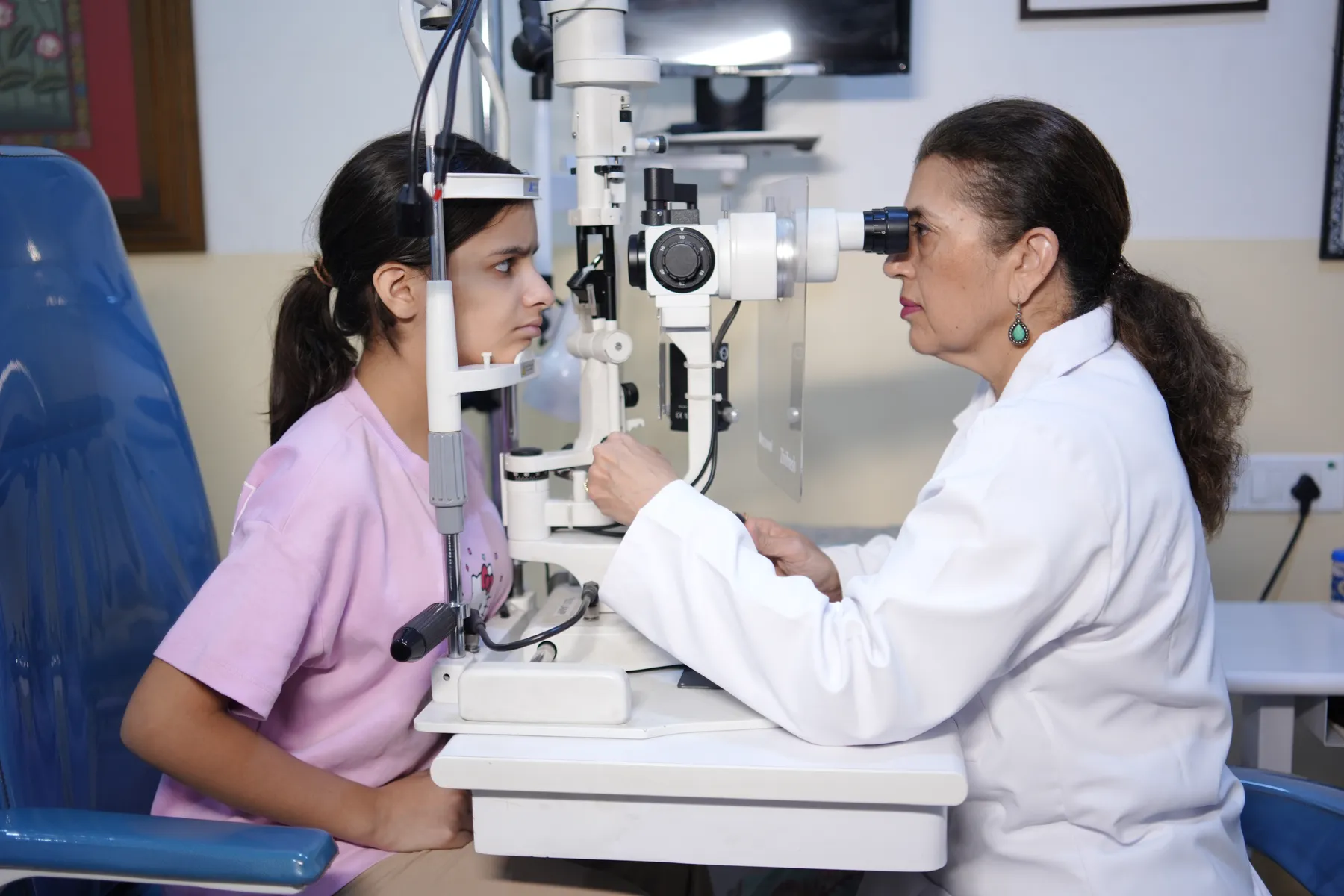
You may be eligible for LASIK if you are an adult with a stable glasses power, healthy and adequately thick corneas, no active eye disease and realistic expectations. Only a detailed screening can confirm it. Seven tests do most of the work, and passing all of them is what makes LASIK safe for your eyes.
Basic eligibility at a glance
| Criterion | Usual requirement |
|---|---|
| Age | 18 or above; most clinics prefer 21 and over |
| Power stability | No significant change for about 12 months |
| Cornea | Healthy, regular, adequate thickness |
| Eye health | No active infection, keratoconus, uncontrolled glaucoma or advanced cataract |
| General health | No uncontrolled diabetes or autoimmune disease; not pregnant or breastfeeding |
| Expectations | Understand that reading glasses may be needed after 40 |
These are general guides. Your surgeon decides after examining you. See our page on LASIK surgery in Noida for the full process.
The 7 tests before LASIK
1. Refraction and stability check
Your glasses power (myopia, hyperopia, astigmatism) is measured, and your old prescriptions are compared. If your power has changed noticeably in the last year, surgery is usually delayed, because the result is only as stable as the eye.
2. Corneal topography or tomography
A scan maps the front, and often the back, of your cornea. It looks for hidden irregularity, such as early keratoconus (a condition where the cornea thins and bulges). Even one abnormal map can rule out LASIK.
3. Corneal thickness (pachymetry)
LASIK removes tissue, so the cornea must be thick enough to remain strong. Surgeons usually leave at least about 250 to 300 microns of untouched tissue under the flap. A thin cornea does not always mean "no", but it limits the power that can be treated.
4. Pupil size
A large pupil in dim light can increase glare and halos after surgery, especially at high powers. It is measured in low light.
5. Dry eye tests
Tear quantity and quality are checked with tests like tear break-up time and the Schirmer test. LASIK temporarily worsens dryness, so dry eyes are treated first, or another procedure is considered.
6. Dilated retina and eye pressure check
The retina is examined for thin areas, holes or tears, which are more common in high myopia. The eye pressure is checked to screen for glaucoma. Problems found here may need treatment before or instead of LASIK.
7. Contact lens and health history
Soft lenses are usually stopped for one to two weeks before the scan, and harder lenses for longer, because they reshape the cornea. Your doctor also asks about diabetes, autoimmune disease, medicines and past eye problems.
Who is usually not a LASIK candidate?
- Keratoconus or suspected keratoconus
- Very thin cornea or very high power
- Unstable power
- Pregnancy or breastfeeding
- Active eye infection or severe dry eye
- Advanced glaucoma or significant cataract
Many of these people still have options. ICL suits some with high power or thin corneas, and surface laser procedures suit others. Compare them in LASIK vs ICL vs SMILE .
Noida note
Long screen hours and air-conditioned offices contribute to dry eye among Noida professionals, and city pollution can add irritation. If you work 8 hours or more on a screen, tell the team. Many patients also come to us from Sectors 62, 18 and 15, or from Indirapuram, so plan the screening visit around work hours. It can take 60 to 90 minutes with dilation.
When to see a doctor
Get examined before considering LASIK if your power keeps changing, if you have blurry vision even with glasses or if you have eye pain, redness or discharge. Sudden flashes, new floaters or a shadow need urgent retina attention.
Frequently asked questions
What is the age limit for LASIK?
Most surgeons treat from 18, preferably 21, when glasses power has stopped changing. There is no strict upper limit, but after about 40 to 45, reading glasses become necessary anyway, and cataract may be the better issue to address. Your eye health matters more than age.
Can I have LASIK with a thin cornea or high power?
Sometimes, but not always. If the cornea is too thin for the planned correction, LASIK may leave too little tissue behind. Alternatives such as ICL are then considered. The scan and thickness measurement decide, and your surgeon will explain your safe limits.
Who should not have LASIK?
People with keratoconus, unstable power, severe dry eye, active infection, uncontrolled autoimmune disease or pregnancy should not. Those with advanced glaucoma or retinal problems need special assessment. A full screening identifies these risks before any decision.
How long does the LASIK eligibility check take?
Usually one to two hours, including dilation. You should avoid contact lenses beforehand as advised and bring someone along, since dilation blurs near vision for some hours. Check the current fee with our desk.
Book your LASIK eligibility screening
Find out where you stand before deciding. See details on LASIK costs in Noida , then visit Vision Plus Eye Centre, Sector 51, Noida, or Gaur City-1, Greater Noida West. Appointments and WhatsApp: +91 8800313134. Surgery consultation: +91 9717417417.
Medically reviewed by Dr. Ritu Aurora, November 2026