This page is for education and preparation. Treatment suitability can only be confirmed after an in-person examination by a qualified ophthalmologist.
01
Overview
Lumecca is a light-based treatment used for selected pigmentation and vascular skin concerns. Around the eyes, safety and patient selection matter more than speed. Vision Plus Eye Centre evaluates the eyelid and facial skin, checks for suspicious lesions and protects the eyes carefully before discussing whether Lumecca is appropriate. It is a cosmetic skin treatment, not a treatment for the eyeball or for retinal disease.
Every eye deserves a plan as individual as the person behind it.
02
Understanding Your Eye
The eyelid skin is thin and close to delicate ocular structures. Pigment and superficial blood vessels respond differently to light, so settings and eye protection must be tailored to skin type and the treatment area.
03
Symptoms to Watch For
Sun-related pigmentation around the face
Selected superficial vascular redness
Uneven skin tone after a clinical skin assessment
Cosmetic concerns around, but not inside, the eye
04
Causes & Risk Factors
Pigmentation may relate to sun exposure, hormones, inflammation or natural variation. A changing or irregular spot needs medical assessment before cosmetic treatment. Recent tanning, photosensitising medication, active skin inflammation, darker skin types without appropriate assessment and a history of abnormal scarring.
05
Diagnostic Tests
Skin and eyelid examination
Review of medicines and photosensitivity
Assessment of pigmented lesions
Skin-type and treatment-area planning
Ocular protection check
06
Treatment Options
A supervised light-based session targets selected superficial pigment or vascular changes. Sunscreen, gentle skin care and post-treatment instructions are essential. Suspicious lesions are referred for appropriate diagnosis rather than treated cosmetically.
07
Are You a Candidate?
Suitability is decided case by case. Lumecca is not used on the eye itself, and eye protection is mandatory.
08
How to Prepare
Bring your previous prescriptions, reports and a list of medicines to your consultation. Our team will explain which tests are needed for Lumecca Treatment and what you can expect before any procedure.
09
Your Procedure Journey
Your visit is planned in clear stages: specialist evaluation, focused diagnostics, a discussion of options, written instructions and a follow-up plan. For Lumecca Treatment, the exact pathway is personalised after examination rather than decided from a form alone.
10
Recovery & Aftercare
Mild redness, warmth or temporary darkening of pigment can occur. Avoid direct sun and follow the aftercare plan while the skin settles.
11
Benefits, Limitations & Possible Risks
The aim of Lumecca Treatment is meaningful, safe improvement — not an unrealistic promise. Your specialist will discuss expected benefits, limitations, alternatives and the warning signs that need prompt review. Burns, pigment changes, blistering or eye injury are possible with inappropriate use. Treatment should only be performed with qualified supervision and proper ocular protection.
12
Cost & Insurance Guidance
The cost of Lumecca Treatment depends on diagnosis, tests, technique, lens or device choice and the aftercare required. Our front desk shares a clear estimate after evaluation and can guide you on insurance, cashless or reimbursement questions.
131579+ words
Complete Patient Guide to Lumecca Treatment
Use this guide to understand the condition, the evaluation process and the questions worth asking at your appointment. It is educational information, not a substitute for an examination.
01
What this service means for you
Lumecca is a light-based treatment used for selected pigmentation and vascular skin concerns. Around the eyes, safety and patient selection matter more than speed. Vision Plus Eye Centre evaluates the eyelid and facial skin, checks for suspicious lesions and protects the eyes carefully before discussing whether Lumecca is appropriate. It is a cosmetic skin treatment, not a treatment for the eyeball or for retinal disease. A consultation for Lumecca Treatment is designed to answer three practical questions: what is changing in your eye, how significant is it today, and what is the safest next step? Two people with the same headline diagnosis may need different advice because age, occupation, general health, previous treatment and the condition of the other eye all matter. Our team therefore avoids one-size-fits-all promises and builds the discussion around your daily vision goals.
02
The eye structures involved
The eyelid skin is thin and close to delicate ocular structures. Pigment and superficial blood vessels respond differently to light, so settings and eye protection must be tailored to skin type and the treatment area. Understanding the anatomy makes the plan easier to follow. Your doctor will connect what is seen at the slit lamp, on scans or during a dilated examination with the way you describe your vision. This helps separate a temporary surface problem from a change that needs monitoring or treatment. It also means you can make an informed choice instead of feeling rushed by a technical report.
03
Symptoms and changes to notice
People seek help for Lumecca Treatment because of changes such as Sun-related pigmentation around the face, Selected superficial vascular redness, Uneven skin tone after a clinical skin assessment, Cosmetic concerns around, but not inside, the eye. Symptoms can be intermittent, especially early in the course, and the absence of pain does not always mean that the eye is healthy. Note when the change started, whether one or both eyes are affected, and whether it is worse in dim light, while reading, on screens or during driving. A short symptom timeline is valuable during the consultation.
04
Causes, risks and prevention
Pigmentation may relate to sun exposure, hormones, inflammation or natural variation. A changing or irregular spot needs medical assessment before cosmetic treatment. Recent tanning, photosensitising medication, active skin inflammation, darker skin types without appropriate assessment and a history of abnormal scarring. Risk does not mean that a problem is inevitable. It means that prevention and scheduled examinations are more valuable. Do not change prescribed medicines without the doctor who started them, protect the eyes from injury, follow contact-lens hygiene if relevant, and keep diabetes, blood pressure and other medical conditions under control. Avoid rubbing the eyes and report a sudden change rather than waiting for a routine appointment.
05
How diagnosis is confirmed
The assessment for Lumecca Treatment begins with a conversation and a careful examination, then uses only the tests that add useful information. Possible investigations include Skin and eyelid examination Review of medicines and photosensitivity Assessment of pigmented lesions Skin-type and treatment-area planning Ocular protection check. Measurements are interpreted together: a scan is not a diagnosis on its own, and a normal result today may still need comparison with a future visit. We document a baseline when appropriate so that even small changes can be identified early.
06
Understanding your treatment choices
A supervised light-based session targets selected superficial pigment or vascular changes. Sunscreen, gentle skin care and post-treatment instructions are essential. Suspicious lesions are referred for appropriate diagnosis rather than treated cosmetically. The doctor will explain the intended benefit, likely limitations, alternatives and what may happen if you wait. If more than one option is reasonable, you will have time to compare them. A treatment plan may include observation, prescription medicines, glasses or lenses, laser, injections or surgery depending on the condition. The safest choice is the one that matches the examination and your ability to follow the aftercare.
07
Who may be suitable
Suitability is decided case by case. Lumecca is not used on the eye itself, and eye protection is mandatory. Suitability is confirmed only after an examination. Tell the team about pregnancy, allergies, previous eye surgery, steroid use, blood thinners, diabetes and any general-health condition that may affect healing. If the timing is not right, monitoring is not a rejection of care; it is an active plan with a clear review date and warning signs to watch.
08
Preparing for your visit or procedure
Bring previous prescriptions, scans, operation notes and a complete medicine list for your Lumecca Treatment appointment. Wear comfortable clothing and arrange transport if your pupils may be dilated or if a procedure is planned. Ask which medicines to continue, whether you should eat normally and how long the visit may take. It is helpful to bring a family member who can listen, take notes and support the aftercare plan.
09
Recovery, follow-up and daily life
Mild redness, warmth or temporary darkening of pigment can occur. Avoid direct sun and follow the aftercare plan while the skin settles. Recovery is not measured only by how quickly vision looks clearer. The eye also needs time to settle, and scheduled reviews allow the doctor to check pressure, inflammation, healing or disease activity. Use every drop at the correct time, wash your hands, avoid rubbing and follow restrictions on water, dust, screens, exercise or driving. Call promptly if the written warning signs appear.
10
Benefits, limits and possible risks
The aim of Lumecca Treatment care is safer, more useful vision and a plan that protects the eye over time. Results vary because every eye heals differently and some damage cannot be reversed. Burns, pigment changes, blistering or eye injury are possible with inappropriate use. Treatment should only be performed with qualified supervision and proper ocular protection. Ask about the common temporary effects as well as rare complications, and make sure you know who to contact outside clinic hours. Clear expectations are part of safe medical care, not a reason to delay necessary treatment.
11
A practical decision checklist
Before deciding about Lumecca Treatment, make sure you can answer: What exactly was found? Which eye is affected? What is the purpose of each proposed test or treatment? What are the alternatives? What happens if we observe? How long is recovery and which follow-ups are essential? Write down your questions. If you need another opinion, your records and scans can be shared so that the next specialist can review the same evidence.
12
Your next clear step
If you have noticed a new or persistent change, book an assessment rather than trying to diagnose yourself online. At Vision Plus Eye Centre, the first visit is focused on listening, examining and explaining. You will receive a practical next step for Lumecca Treatment, whether that is reassurance, a prescription, monitoring or treatment. Sudden sight loss, a curtain-like shadow, severe pain or injury should be treated as urgent and not wait for a routine slot.
13
Planning around work and family
Vision care should fit real life. Tell us whether you drive, work on screens, read for long periods, play sport, care for children or depend on precise vision for your job. This context helps the team explain when you can return to work, whether you may need help with transport, and how to organise drops or reviews. If a procedure is planned, keep the first few days as flexible as possible and arrange support for meals, travel or household tasks if your doctor recommends it.
14
Making sense of reports and scans
Eye reports can contain numbers, abbreviations and images that look worrying without context. Bring the report to your appointment and ask which result is most important, whether it is stable, and how it changes the plan for Lumecca Treatment. A scan is one part of a complete assessment; symptoms, examination findings and comparison over time matter as well. Keep copies of prescriptions and imaging so future doctors can see the baseline rather than starting the investigation again.
15
Long-term outlook
The outlook for Lumecca Treatment depends on the cause, stage, general health and consistency of follow-up. Some patients need a single correction, while others benefit from a long-term monitoring relationship. A stable review is still a successful result when it confirms that no treatment is needed today. If the condition can recur or progress, the team will explain the signs that should bring you back sooner and the interval for your next planned examination.
16
Questions worth asking your ophthalmologist
Ask what the diagnosis is called in plain language, which part of the eye is involved, what improvement is realistic and what cannot be changed. Also ask about alternatives, side effects, costs, recovery, warning symptoms and the best number to call. Understanding the plan improves adherence and reduces anxiety. You should never feel embarrassed to ask for an explanation again; informed patients are active partners in safer care for Lumecca Treatment.
17
Aftercare that supports a good result
Small habits after your Lumecca Treatment visit or procedure make a meaningful difference. Follow the drop schedule instead of stopping when the eye feels better, keep the bottle tip away from lashes, wash hands before touching the eyelids and protect the eye from dust or accidental rubbing. Keep the follow-up date even if vision seems stable, because pressure, inflammation, healing or retinal changes may need to be measured rather than guessed. If you are unsure whether a symptom is expected, contact the clinic and describe when it began, which eye is affected and whether it is getting worse.
14
Your Specialist
Medical Director · Cataract & Refractive Consultant
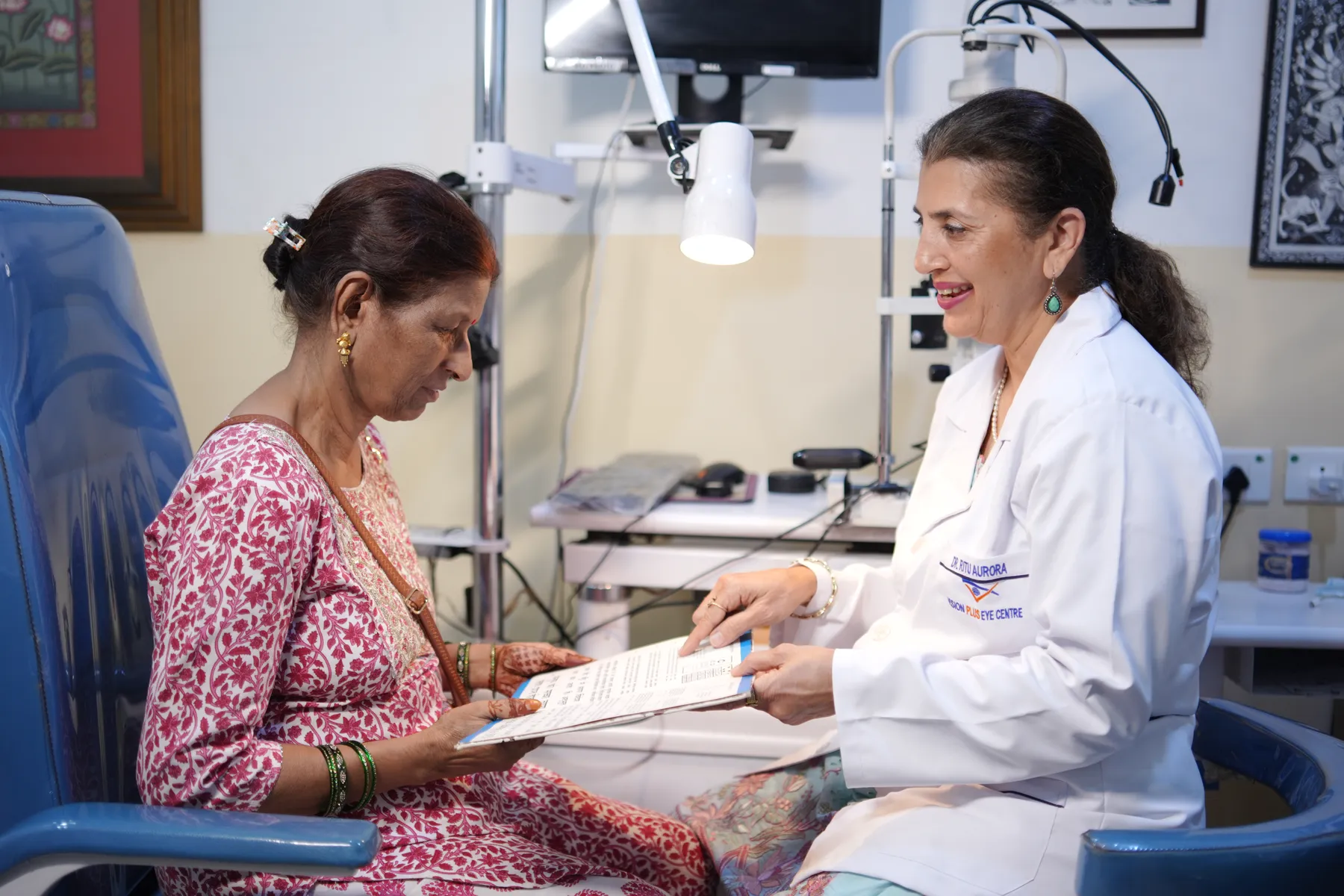
Dr. Ritu Aurora
Leads anterior-segment and refractive care with careful planning, precise measurements and honest counselling.
Because we treat decisions, not just eyes. You get accurate diagnosis with the right technology, an honest discussion of every option — including the option to wait — transparent cost guidance and follow-up that actually follows up. That is the Vision Plus standard at Sector 51 and Noida Extension.
Specialist-ledPurposeful diagnosticsClear next steps
1610 questions
10 Frequently Asked Questions
Straight answers about Lumecca Treatment, appointments, testing, treatment and recovery.
Not necessarily. Dark circles can have pigment, vascular, shadow or medical causes. We assess the cause before discussing cosmetic treatment.
Only selected periocular areas may be considered, with strict eye protection. It is never applied to the eyeball.
It depends on the concern, skin response and treatment area. A consultation is needed before a course is suggested.
Anyone with symptoms, a diagnosis, a family risk, or a recommendation for Lumecca Treatment should arrange a specialist assessment. The right plan depends on the examination rather than symptoms alone.
Your doctor reviews your symptoms, medical history and previous reports, then chooses focused tests for Lumecca Treatment. The findings are explained clearly before any treatment decision is made.
Testing can include a clinical examination, vision and pressure checks, and imaging or measurements selected for Lumecca Treatment. Not every patient needs every test, and the team explains the purpose of each one.
Not always. Some findings are safely observed or managed with habits, glasses or medicines. Treatment is recommended when the expected benefit is greater than the risk of waiting.
Bring your current glasses, contact lenses, medicines, diabetes or blood-pressure records and previous eye reports. Avoid driving if dilation is likely to make your vision temporarily blurred.
The timeline depends on whether Lumecca Treatment needs observation, medicines, a procedure or surgery. Your ophthalmologist gives written activity and follow-up instructions for your specific eyes.
It can, even when symptoms begin in one eye. The examination compares both eyes and creates a follow-up schedule that matches the level of risk.